
My 2025 Download: The Books That Re-Wired My Brain for People-Pleasing Recovery (And How I Coach)
This post contains affiliate links. This means that if you click on one of the book links and make a purchase, I earn a small commission at absolutely no extra cost to you. I only recommend tools and books I genuinely find useful.
I'm an avid reader. I read over 200 books a year—mostly fiction, mostly romance. Dark mafia, morally gray characters, the kind of stories where everyone's a little broken and no one apologizes for it. But once in a while, I sneak in a non-fiction book to help me understand myself better. I like to research psychology, sociology, topics in personal development. Not because I'm noble or disciplined, but because I genuinely want to know how humans work.
This year, I read twelve non-fiction books. And here are my thoughts about each.
I've been coaching people-pleasers for two years now. In that time, I've worked with over 50 clients—smart, capable women who know intellectually what they need to do but can't seem to make it stick. I know the pattern intimately: the chronic over-functioning, the compulsive yes, the exhaustion that comes from holding everyone else's emotional weather. I've helped clients build boundaries, reclaim their confidence, and get unstuck from the people-pleasing loop.
But here's what I've learned: behavior doesn't change overnight. And people-pleasing? It's very much like addiction. My clients who've gone months without apologizing for their boundaries, who've practiced saying no without the three-day shame spiral—they still fall off the wagon. They still reach for that hit of "everyone's happy with me" when things get hard. And when they do, they come to our sessions feeling like they've failed.
They haven't. This is just how recovery works.
This year, I wanted to understand why. Not just for my clients, but for myself too. I wanted to know why the old programming keeps creeping back in—why the body reaches for the approval hit even when the brain knows better. Why some strategies work and others don't. Why relapse is part of the process, not proof that the process isn't working.
So I stopped looking for simple solutions and started looking for mechanisms. I wanted to understand the biology of why people-pleasing is so hard to quit, the mechanics of what makes a boundary hold, and how to help my clients recognize when they're sliding back into old patterns before they're fully relapsed. What I found didn't just make me a better coach. It gave me the language to help my clients climb back on the wagon with grace instead of shame.
Below isn't just a bibliography. It's a map of how humans actually change, traced in the margins of books I didn't just read but interrogated. Here's what I learned, how it deepened my coaching, and how it helps my clients stay in recovery—even when they stumble.
The Hardware: Nervous System & Trauma
Why willpower doesn't work when your body thinks it's being chased by a tiger.
I started here because I had to. Every other approach I'd tried—the affirmations, the goal-setting, the "just communicate better"—kept collapsing under pressure. And I finally understood why: you can't think your way out of a nervous system response. The body doesn't speak in logic; it speaks in sensation, and it's always, always listening for danger.

The Body Keeps the Score by Bessel van der Kolk
My take: This book broke something open in me. Van der Kolk explains that trauma isn't a memory stored neatly in your brain—it's a physical reality lodged in your tissues, your breath, your gut. It's why you can know, intellectually, that you're safe, and still feel your chest tighten when someone raises their voice. It's why insight without embodiment just creates more shame.
The coaching upgrade: I stopped trying to talk clients out of their feelings. We honor the physical sensation first now. If the body doesn't feel safe, the mind cannot be coached. We don't bypass the body anymore—we thank it for the information and then we teach it, slowly, that it can land.
The other side: This book can pathologize normal human responses and make people over-identify with trauma. Not every difficult childhood moment is "trauma that lives in your tissues." Sometimes it risks creating a generation of people who use nervous system language to avoid responsibility or difficult growth. The book is also quite clinical and can feel overwhelming for someone just trying to understand why they people-please.
This book is for you if: you've tried cognitive approaches (therapy, journaling, positive thinking) and still feel stuck in your body's reactions.
Skip it if: you're looking for practical tools rather than deep theory, or if you're prone to over-pathologizing your experiences.
⭐ Top Pick
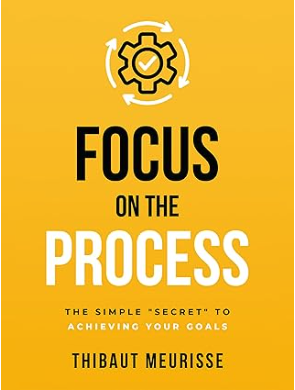
Focus on the Process by Thibaut Meurisse
My take: This book fundamentally changed how I think about goals—and why so many of my clients were burning out while "achieving." Meurisse argues that we exhaust ourselves obsessing over the gap between where we are and where we want to be. But the result—the money, the weight loss, the promotion—is just a side effect. The process, the daily action itself, is the actual goal.
The coaching upgrade: This gave me the language to walk clients through what Meurisse calls the "Cycle of Excitement." When they hit the Plateau—that brutal moment when the initial fun wears off and results haven't shown up yet—we don't panic. We don't white-knuckle it. We double down on the daily habit, not the distant dream. This is where nervous system work and process work intersect: the body needs predictability and rhythm more than it needs to "see results." Safety lives in the repetition, not the outcome.
The other side: The "process over results" philosophy can become a loophole if it's not paired with honest feedback. "I'm focused on the process" can quietly turn into "I'm not getting results, but I'm afraid to say that out loud." The book also doesn't fully address that some processes are simply ineffective—you can show up every day to a strategy that isn't working. Sometimes the answer isn't more commitment, it's a course correction. And for people in survival mode—financially or physically—being told "don't focus on the money, focus on the daily action" can feel out of touch. Sometimes the gap matters because rent is due.
This book is for you if: you're burning out from constant goal-chasing or you quit things the moment they get hard.
Skip it if: you're already good at showing up but need help evaluating whether your strategy is actually working.
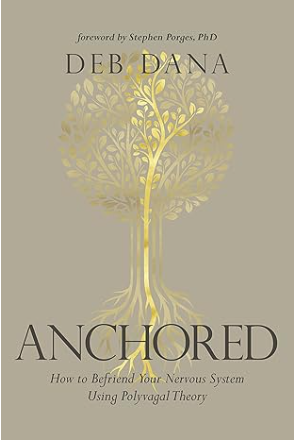
Anchored by Deb Dana
My take: Deb Dana handed me a ladder when I was standing in a hole. She maps the autonomic nervous system in a way that makes everything else make sense: we're either safe and social, mobilized for threat (fight/flight), or immobilized in collapse (freeze/shutdown). We aren't broken; we're just in a specific state. And that state has rules.
The coaching upgrade: I started tracking my own nervous system states throughout the day—noticing when I'd drop into fight mode during a client call if they pushed back, or when I'd freeze when asked to promote my services. Once I could name my own state, I could finally help clients do the same. Now I teach them to map their nervous system like a weather pattern. When a client tells me they "just can't" do something, I don't push harder. I help them notice: are you mobilized (fight/flight) or immobilized (shutdown)? Because the intervention is completely different. If they're mobilized, we need to calm the system. If they're shutdown, we need to gently bring energy back online. This became the foundation for everything else I do.
The other side: The polyvagal theory framework, while useful, can become reductive. Not everything is a nervous system state, and constantly monitoring "am I in ventral vagal?" can become its own form of hypervigilance. Some readers use this as a way to avoid difficult conversations: "I can't talk about this right now, my nervous system is dysregulated." Sometimes you're just uncomfortable, not unsafe.
This book is for you if: you feel chronically anxious or shut down and can't figure out why.
Skip it if: you want immediate behavioral tools rather than understanding the underlying system.
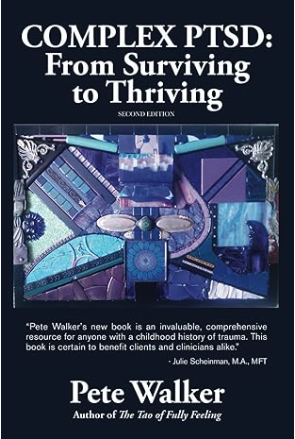
Complex PTSD: From Surviving to Thriving by Pete Walker
My take: Pete Walker named something I'd been living for decades but couldn't see: fawning. The fourth F. The survival response that looks like niceness but feels like erasure. He identifies people-pleasing not as a personality quirk but as a high-speed safety maneuver—an attempt to merge with others to avoid danger.
The coaching upgrade: I had to get honest about my own fawning first. I was the coach who over-delivered, who gave extra sessions for free, who couldn't hold a boundary without apologizing three times. Walker helped me see that wasn't generosity—it was a survival pattern from childhood where being "good" kept me safe. Once I saw it in myself, I could finally see it clearly in my clients. Now when someone says "I'm just too nice," I don't nod sympathetically. I get curious: "When did being nice become a strategy instead of a choice?" That question opens up the real work—teaching their nervous system that they don't have to disappear to stay safe. I started holding my own boundaries without apology, and that modeled something my clients had never seen before.
The other side: Walker's work can lead people to diagnose themselves with Complex PTSD when they may not actually meet clinical criteria. The "fawning" concept has become so popularized that any act of kindness or accommodation gets labeled as trauma response. Sometimes being nice is just... being nice. Not everything is a survival strategy.
This book is for you if: you relate to the people-pleasing pattern and suspect it's deeper than just being "too nice."
Skip it if: you're looking for lighter reading or you're not ready to explore childhood patterns.
The Software Patch: Unlearning People-Pleasing
Debugging the "Good Kid" programming.
Once I understood that my body was running old code, I needed to understand the program itself. Where did I learn that my worth was conditional on other people's comfort? And more importantly—how do I uninstall that?
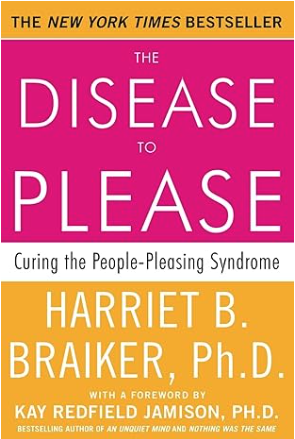
The Disease to Please by Harriet Braiker
My take: Braiker calls people-pleasing what it is: an addiction. Not metaphorically—literally. The compulsion to avoid conflict, to merge, to earn approval operates like substance dependency. And the high? That hit of relief when someone isn't mad at you. That brief, beautiful moment when you're good again.
The coaching upgrade: I started noticing my own "yes" addiction in real time. A potential client would ask for a discount and I'd feel my body flood with the urge to say yes immediately—anything to avoid that moment of tension. Braiker taught me that urge was chemical, not relational. So I implemented what I call the "24-hour rule" in my own business first: any request for my time, energy, or resources gets an automatic "Let me check my calendar and get back to you." That pause—even just 10 seconds—breaks the addictive cycle. Now I teach this to every client who struggles with boundaries. The delay isn't rude; it's the space between stimulus and response where actual choice lives. I've watched clients transform just by learning to say "I need to think about that" instead of reflexive yes.
The other side: Framing people-pleasing as a literal "disease" or "addiction" can be disempowering. It medicalizes what might actually be a learned behavior that can be unlearned without such dramatic framing. The book also leans heavily on women's experiences in ways that can feel dated or stereotypical. Some of the advice feels like 90s pop psychology rather than evidence-based practice.
This book is for you if: you need the wake-up call that people-pleasing is serious, not just a quirk.
Skip it if: clinical language makes you feel broken rather than empowered.
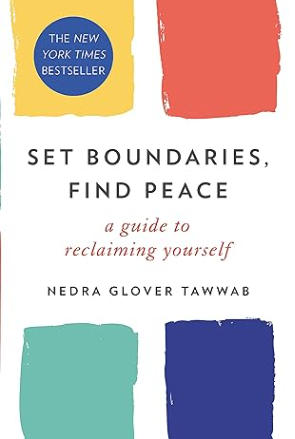
Set Boundaries, Find Peace by Nedra Glover Tawwab
My take: This book gave me language I didn't know I needed. A boundary isn't a wall; it's a door. And most of us aren't exhausted because we're busy—we're exhausted because we're porous. We leak energy everywhere because we were never taught that we're allowed to have edges.
The coaching upgrade: Tawwab gave me the clarity I needed to stop apologizing for my boundaries. I used to say things like, "I'm so sorry, but I can't take on another client right now because my schedule is really full and I need time with my family and..." The endless justification just invited negotiation. Now I say: "My coaching practice is full right now. I can add you to my waitlist or refer you to another coach." Period. No apology, no over-explanation. That shift changed my coaching completely because I finally understood: a boundary without guilt is what teaches clients they can have one too. Now I help clients script their boundaries word-for-word, and then we practice saying them out loud until the discomfort becomes familiar instead of terrifying. The uncomfortable silence after a boundary? That's where the magic happens—because that's where you learn the world doesn't end.
The other side: The boundary movement has created a culture where people weaponize "boundaries" to avoid accountability or basic human kindness. "That's not my boundary" has become a way to be selfish rather than self-preserving. Tawwab's work is solid, but in practice, some readers use it as permission to become rigid, avoidant, or dismissive of others' legitimate needs.
This book is for you if: you need concrete scripts and examples for setting boundaries.
Skip it if: you already know what boundaries are but struggle with the emotional aftermath of setting them.
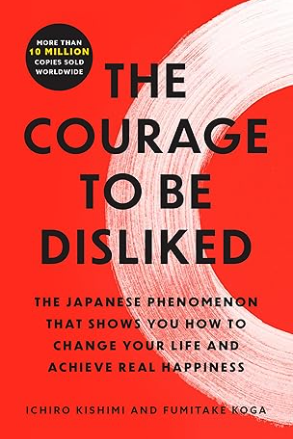
The Courage to Be Disliked by Ichiro Kishimi
My take: This one landed like a dare: if you aren't disappointing anyone, you aren't leading your own life. Freedom, real freedom, is the ability to be disliked by other people and be okay with it. Not cruel. Not careless. Just... free.
The coaching upgrade: I tested this theory on myself first. I raised my rates. I stopped offering free "pick your brain" calls. I turned down speaking opportunities that didn't align with my work. And I watched, almost scientifically, as some people got annoyed. And the world kept turning. My business grew. My ideal clients stayed. The people who left were never my people to begin with. That experience was the permission slip I needed to help clients do the same. Now I assign what I call "disappointment exposure therapy"—small, low-stakes experiments in disappointing people. Say no to a coffee date. Don't respond to a text immediately. Decline a committee you hate. We start small because the nervous system needs proof that disappointment isn't dangerous. Each time a client reports back that someone survived being told "no," we're rewriting decades of conditioning.
The other side: This Adlerian philosophy can veer into toxic individualism. "All problems are interpersonal relationship problems" ignores systemic oppression, poverty, and actual external barriers. The book's radical self-focus can justify self-centered behavior. "I'm okay with disappointing you" can become "I don't care about your feelings at all." Context and power dynamics matter.
This book is for you if: you're paralyzed by the fear of disappointing people.
Skip it if: you're already comfortable being disliked and need more nuance about interdependence.
The Operating System: Mindset & Identity
Rewriting the user manual.
Nervous system work taught me how to regulate. Boundary work taught me how to protect my energy. But this section taught me something harder: how to stop choosing the familiar hell over the unfamiliar heaven.
⭐ Top Pick
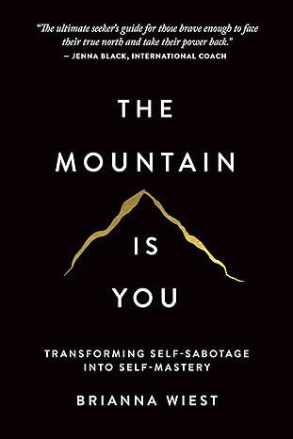
The Mountain Is You by Brianna Wiest
My take: Wiest says something most self-help books won't: self-sabotage isn't trying to hurt you. It's trying to keep you safe by keeping you in the familiar. Your brain would rather manage a known problem than risk an unknown solution. This is why we pick the same fights, date the same people, repeat the same patterns.
I have read The Mountain Is You at least once a year since it was first published. It's the book I always go back to and recommend to others—not because I forget what it says, but because I need to remember it differently each time. Every year I'm climbing a different mountain, and Wiest's framework helps me see what I'm actually protecting myself from.
The coaching upgrade: Wiest taught me to stop seeing my clients' resistance as defiance and start seeing it as data. When a client keeps "forgetting" to do the work between sessions, or finds reasons why every strategy won't work for them, I used to think they weren't committed. Now I ask: "How is staying stuck actually serving you?" The answers are always revealing. Staying small means they don't have to risk failure. Staying overwhelmed means they don't have to face the grief of lost time. Staying in the familiar problem means they don't have to deal with the unfamiliar solution. Once we name what the self-sabotage is protecting, we can work with it instead of fighting it. I also started applying this to myself—noticing when I'd procrastinate on launching a new program or avoid promoting my work. My self-sabotage was keeping me safe from visibility, from judgment, from the vulnerability of wanting something.
The other side: Wiest's writing can feel like Pinterest quotes strung together—beautiful, but sometimes lacking depth or nuance. The book assumes that all self-sabotage is unconscious self-protection, which isn't always true. Sometimes we sabotage because we lack skills, resources, or support—not because we're "attached to the familiar." The book can also make readers over-analyze normal setbacks as deep psychological blocks when sometimes you just need to try again.
This book is for you if: you keep getting in your own way and can't figure out why.
Skip it if: you prefer dense, academic writing or need more actionable steps than mindset shifts.
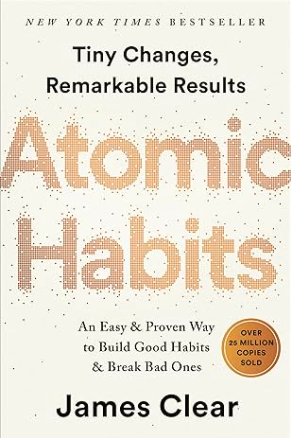
Atomic Habits by James Clear
My take: Clear's insight is deceptively simple: you don't rise to the level of your goals; you fall to the level of your systems. And true change isn't outcome change ("I want to lose weight")—it's identity change ("I am someone who moves my body").
The coaching upgrade: I realized I'd been setting myself up for failure by making big, dramatic commitments—"I'm going to post content every day!" "I'm going to work out for an hour!" My nervous system would spike with anxiety at the size of the promise, and I'd quit within a week. Clear taught me that tiny promises build self-trust better than big ones. So I started with: "I'm someone who writes for 10 minutes." "I'm someone who moves my body for 5 minutes." The goal wasn't the outcome—it was proving to myself that I keep promises to myself. That shift changed everything in my coaching. Now instead of helping clients set ambitious 90-day goals, I help them make micro-commitments they can't fail. Not "I'm going to network every week" but "I'm someone who sends one LinkedIn message." Not "I'm going to meditate daily" but "I'm someone who pauses before reacting." We're building an identity, not checking boxes.
The other side: Clear's system works beautifully for people with stable lives, executive function, and consistent environments. For people dealing with chronic illness, poverty, caregiving responsibilities, or neurodivergence, "just make it 1% better every day" can feel tone-deaf. The book also centers individual willpower and systems while ignoring structural barriers. Not everything is a habits problem.
This book is for you if: you struggle with consistency and need a clear system.
Skip it if: your life has significant instability or you're neurodivergent and traditional habit advice hasn't worked.
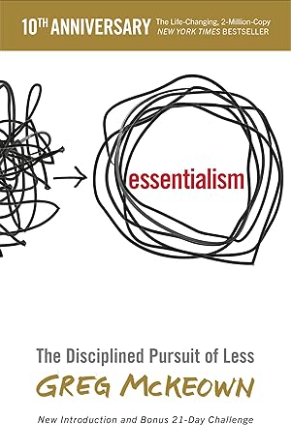
Essentialism by Greg McKeown
My take: McKeown hands you permission to do less. The disciplined pursuit of "less but better" is the only antidote to the chaos of modern life. If you don't prioritize your life, someone else will. And that someone will not have your best interests at heart.
The coaching upgrade: I had to practice this one brutally on myself. I was saying yes to every personal request, every extra project at my full-time job, every "can you just..." from friends and family. I was coaching clients at night, working my day job, and still trying to be available to everyone who needed something. I was exhausted and my best work—both in coaching and at my job—was suffering. McKeown taught me that every yes is a no to something else. So I got ruthless: I identified my "essential intent"—helping high-achieving women stop people-pleasing—and I started evaluating every request through that lens. Does this move my essential intent forward? Does this protect my energy for the work that matters? If not, it's a no. I cut my weekly commitments in half and both my coaching practice and my sanity improved. Now I teach clients the same filter. Before they say yes to anything, I have them ask: "What am I saying no to by saying yes to this?" That question has saved my clients from burnout, resentment, and mediocrity. The no isn't rejection—it's protection of what matters most.
The other side: McKeown writes from a position of enormous privilege. "Just say no to non-essential things" assumes you have the power to say no—that you're not a single parent, hourly worker, or caregiver with actual non-negotiable demands. The book can justify workaholism disguised as "focus." Sometimes what looks like essentialism is just being unavailable to the people who need you.
This book is for you if: you're drowning in commitments and need permission to say no.
Skip it if: you already struggle with under-committing or isolating.
The Interface: Communication & Influence
How to interact with other humans without losing yourself.
This is where everything comes together. You've regulated your nervous system. You've set boundaries. You've built a new identity. Now—how do you actually talk to people without either disappearing or detonating?
Crucial Conversations by Grenny, Patterson, et al.
My take: The moment a conversation turns crucial—high stakes, strong emotions, opposing opinions—our brains usually drop into silence (withdraw) or violence (attack). The key is maintaining psychological safety so both people can stay in dialogue.
The coaching upgrade: I noticed my own pattern: the moment a client questioned my approach or pushed back, I'd either over-explain (fawn) or get defensive (fight). Neither kept us in productive conversation. This book taught me to "step out of the content and into the process"—to name what's happening in the room before we try to fix the problem. Now when I feel a conversation getting heated, I say: "I notice we're both getting activated. Can we pause for a minute and just breathe?" That simple intervention keeps the conversation in the room instead of spiraling into reactivity. I teach my clients the same skill. Before they have the hard conversation with their boss or partner, we practice stepping out: "I care about solving this, and I notice we're both frustrated. Can we take a breath and try again?" It's not avoidance—it's nervous system regulation in real time.
The other side: The framework assumes both parties are operating in good faith and want to solve the problem. It doesn't account for manipulation, bad actors, or power imbalances. "Creating safety" in a conversation with your abusive boss or gaslighting partner isn't always possible or advisable. The book can make people feel like failed communicators when actually they're in a structurally unsafe situation.
This book is for you if: you shut down or blow up in difficult conversations and want better tools.
Skip it if: you're dealing with someone who's manipulative or abusive—this won't fix that.
Never Split the Difference by Chris Voss
My take: Voss, a former FBI hostage negotiator, taught me that empathy is not agreement—it's data gathering. Tactical empathy allows you to disarm another person by making them feel deeply heard before you pivot to your ask. You're not manipulating. You're meeting their nervous system where it is.
The coaching upgrade: I started using Voss's "labeling" technique in my discovery calls and it completely changed my enrollment conversations. Instead of pitching my services, I'd mirror what I heard: "It sounds like you're exhausted from always being the one who holds everything together." "It seems like you're worried that even if you set boundaries, people won't respect them." That simple reflection calmed their nervous system enough that they could actually hear what I was offering. But I also use it in my personal life—with my partner, my friends, my family. "It seems like you're frustrated I didn't respond sooner." Just naming what someone else is feeling defuses so much reactivity. Now I teach clients to use labeling before they make any ask. Don't lead with your need—lead with their reality. Then the conversation can actually happen.
The other side: This is a hostage negotiation manual being applied to marriage and parenting. Voss teaches tactical manipulation, even if he calls it "tactical empathy." Using FBI techniques on your spouse or colleagues can feel deeply inauthentic and manipulative. The question isn't "does it work?"—it's "what kind of relationships are you building when you're constantly 'negotiating'?"
This book is for you if: you need to get better at high-stakes conversations where something's on the line.
Skip it if: authenticity and vulnerability matter more to you than "winning" conversations.
Supercommunicators by Charles Duhigg
My take: Duhigg maps three types of conversations: Practical (What's this about?), Emotional (How do we feel?), and Social (Who are we?). Miscommunication happens when two people are having different types of conversations. You're offering solutions; they need to be heard. You're asking for facts; they need connection.
The coaching upgrade: I realized I'd been having the wrong type of conversation with my clients for years. They'd come to me with a practical problem—"I need help with time management"—but underneath it was an emotional conversation: "I feel like I'm failing." When I stayed in practical mode (offering tips and systems), they'd feel unheard. When I matched their emotional reality first—"It sounds like you're carrying a lot of shame about this"—the practical solutions landed completely differently. Now before any coaching conversation, I diagnose: what type of conversation are they actually trying to have? If they're emotional and I stay practical, I've lost them. If they're practical and I go emotional, they'll feel patronized. This framework taught me to listen for the conversation beneath the conversation.
The other side: Duhigg's framework can make every conversation feel like a performance where you're constantly diagnosing "what type of conversation is this?" Some people use this to avoid vulnerability: "I'm just matching their conversation type" becomes an excuse not to be honest about what you actually need. Sometimes the most effective communication is just saying what you mean.
This book is for you if: you often feel misunderstood or like you're talking past people.
Skip it if: you over-analyze conversations already and need to get out of your head.
The Integrated Human
Reading these books didn't make me perfect. I still feel the urge to fix people who don't want fixing. I still feel phantom anxiety when I say no. I still sometimes catch myself over-explaining, over-functioning, over-giving.
But now I know what that feeling is. It's just my nervous system trying to be a good kid. It's an old program running in the background, trying to keep me safe the only way it learned how.
And because I know what it is, I don't have to obey it.
That's the difference between being a pleaser and being a free woman. Not the absence of the impulse—but the presence of choice.
If you want to do this work—not just read about it, but actually metabolize it into your bones—I'd love to work with you. Let's turn this information into your transformation.
Because you don't need another list of things to fix about yourself.
You need to understand how you were built, what you were taught, and how to run a different operating system.
One that lets you be both kind and free.
